A room can
hold a question.
Public speaking is not the opposite of thinking. It is a way of testing whether a question can survive contact with a room.
The Knife That
Carved Me Better:
Lessons from Regret
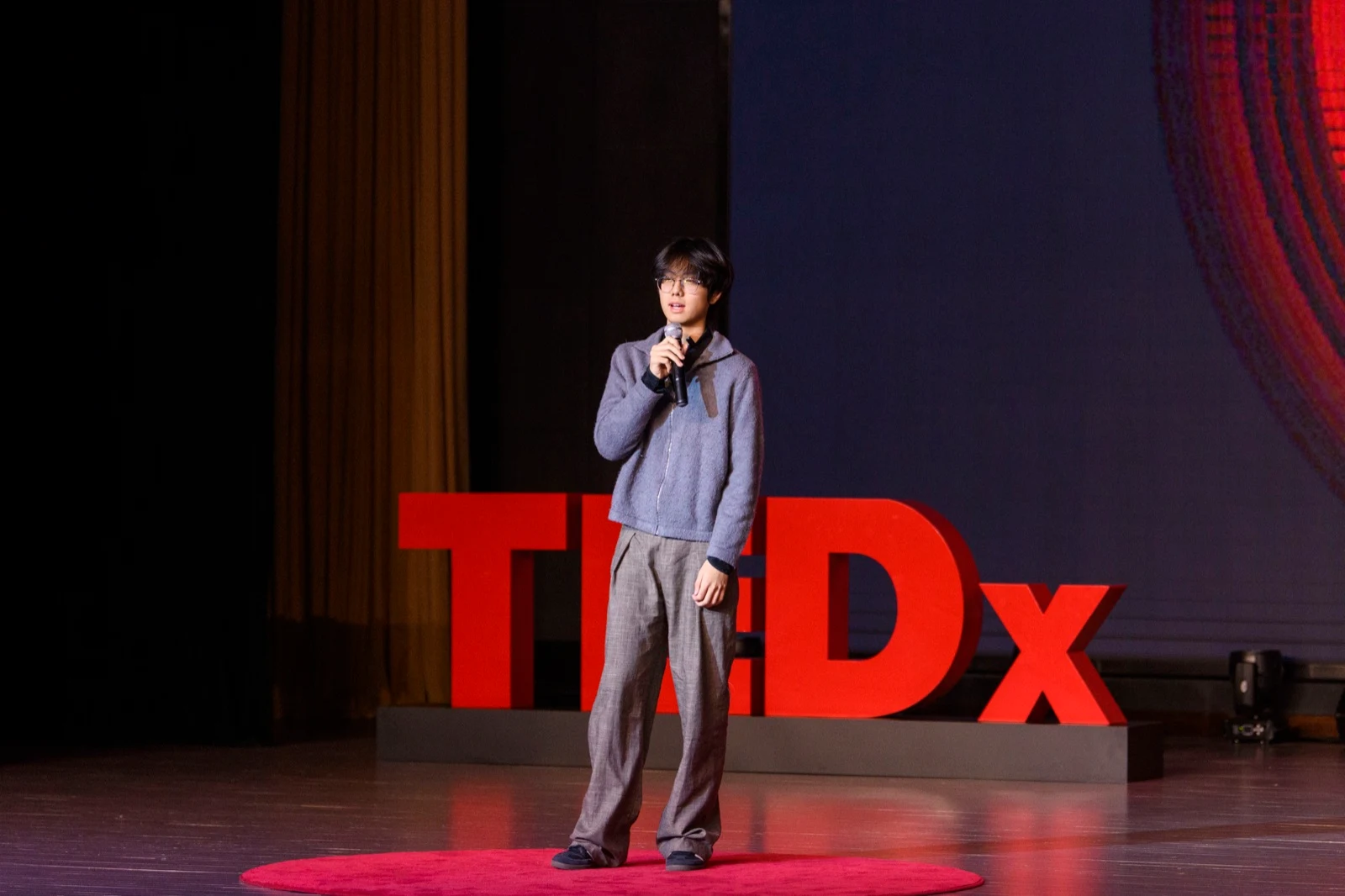
The talk is public now. It holds a question about regret, and the version of yourself it leaves behind. This page is not a transcript; it is the thinking I am still keeping around it.
“I am still becoming” was the line on the stage. The video is the record of one attempt to say something true inside a room.
“I am still becoming.”
The room is part of the sentence. A talk does not exist only in the speaker’s mouth. It exists in the silence before a laugh, in the faces that decide whether a question is allowed to stay open.
I am interested in the difference between being invited to speak and being heard. The first can be a stage. The second is a relationship.

What I’m taking
with me.
A question can be public without becoming a slogan. A stage can hold complexity if you resist the urge to resolve it too early.
The next step is not another performance. It is to let the question change the work: the game, the student hub, the way I listen in a room.
Talk to me about it